
Client
|
Shingijutsu clients discuss their viewpoints and experience working with us. They discuss:
|
Interview with Dr. Gary Kaplan, Virginia Mason Medical Center


Dr. Gary Kaplan
CEO & Chairman, Virginia Mason Medical Center. Seattle, WA 
|
Q. How long have you worked with Shingijutsu?
In 2002, we went to Japan on our first study mission for Genba kaizen. Since then, I have personally led [more than] nine trips because the mission is that important to me: the experience is transformational. All department chairs and VP’s must go if they want to become executives with us. Furthermore, if a VP can’t lead a workshop and maintain Kaizen certification, he or she doesn’t belong here. We try to have Shingijutsu’s head sensei help us for two to three weeks a year and we also engage some of Shingijutsu’s other sensei for events in between |
Q. What makes Shingijutsu unique?
For us, the unique factor is Shingijutsu’s head sensei. He brings both powerful thinking and brilliance. He holds our feet to the fire and spurs us on. None of the other consulting firms can match him. While others are doing project-based improvement, under his teaching we are doing transformation. [See the Harvard Business School case study on Virginia Mason Medical Center, HBS Case Study 9-606-044 by Richard M.J. Bohmer and Erika M. Ferlins, revised January 11, 2006.] |
Interview with Carolyn Corvi, Boeing Corporation

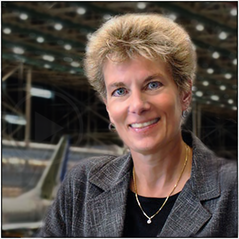
Carolyn Corvi
Vice President of Airplane Production, Boeing Commercial Airplanes. Seattle, WA, (Retired) 
Q. How long have you worked with Shingijutsu?
From 1995 to 1998, Boeing sent 1500 VP’s, directors and supervisors on one-week study missions to Japan with Shingijutsu. The factory floor supervisors were the team leaders! |
Q. What personal stories can you tell about Shingijutsu?
One story occurred in one of my factories. The sensei asked me to stand in an imaginary circle, which he drew on the floor with a wave of his arm, and to report what I saw. After standing there for three minutes, I realized that I couldn’t see anything. Why? The material racks were too high.In 1996, we contracted with Shingijutsu to send sensei and ultimately adopted Shingijutsu’s concept of a Kaizen Promotion Office and built internal capability. Q. What makes Shingijutsu unique? Shingijutsu’s lineage to Mr. Ohno. They [the principals] worked for him and absorbed his thinking and philosophy. Then they created a way to pass this on to others. |
Their way is very Zen-like. They are able to link to people by using everyday examples to explain their thinking. Genba kaizen – getting people out of their offices [to see how work is actually performed in workplaces with their own eyes – is unique. So the sensei handed me a marker and asked me to mark everything that had to be cut down to height (about 5 feet or 1.5 meters) — including the columns holding up the roof! I later decided that it would be better to move the factory to a newer building that didn’t have columns.
Another story occurred in Japan again. Quite unexpectedly, the sensei asked me to teach one of our study mission classes about the “heart of kaizen.” After a few seconds of thought, I spoke about the human dimension — what kaizen means to people and their motivation and fulfillment. When I finished, the sensei seemed pleased. |
Interview with Rich Ballantyne, Heath Tecna Inc

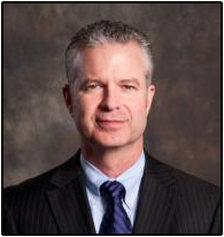
Rich Ballantyne
President CEO of Heath Tecna Inc. Bellingham, Washington 
Q. How long have you worked with Shingijutsu?
Heath Tecna has been working with Shingijutsu since November 2009. Our introduction came about in a humorous way. Our important customer Mitsubishi Aircraft had asked one of our Vice Presidents how Heath Tecna would improve our production performance. I was out of the room at the time of the presentation response. I walked in 2 or 3 minutes into the presentation and hear my VP talking about purchasing a large, multi-functional machine that would increase the number of products we could produce. Of course such a machine is very expensive. Knowing that the leader of our customer group, Mr. Yamada, was responsible for MHI Lean activity. |
I began to count the seconds before he would interrupt the presentation. It took just 10 more seconds!
He leaned forward and said – "It is my experience that improvement does not require bigger more expensive machines. I think I will introduce you to Shingijutsu." Just 30 days later we were in our first Kaizen and our transformation began. Thank you Yamada-san! Q. What makes Shingijutsu unique? Everything! They have a direct lineage from the creator of the Toyota Production System. Their founder is one of his disciples and is also the Father of Moonshine. Not to mention all their Sensei have eliminated the waste of trying to figure out what color of socks to where with their pants! Shingijutsu has leaned out the Kaizen process itself. Unlike many efforts at Kaizen that result in a large number of charts and graphs about how a process can be improved, the Shingijutsu method of Kaizen makes improvement happen. They don't talk about what could happen if we do various things that many times never get done. They show companies how to make change. When their Kaizen event is done on Friday - the process has been improved. No question. In fact, it was improved on Wednesday. The team has just been making further improvements since then! |
Finally, Shingijutsu understands the American culture. It is critical that a team is challenged, pushed, and prodded to higher levels of performance. Shingijutsu Sensei now just how to do this. They combine a great blend of forcefulness, enthusiasm, and patience.
Q. What personal stories can you tell about Shingijutsu? Our very first Kaizen with Shingijutsu was memorable. It was Wednesday evening and the team was moving workstations around in the factory. Again, no PowerPoint, they were moving equipment and laying out the flow. One of our Sensei, Eto-san had a look of concern on his face. I asked what was wrong and he responded, "Nothing, the team is doing well." - I asked again and got the same answer. Finally I said, I know something is bothering you. He indicated some of the team members were concerned that employees would not accept some of the change. Specifically, they would be upset if we removed the radios and the chairs from the line. I asked if he had ever seen radios and chairs in a world-class production line. Of course, the answer was, "No." We removed the chairs, my CFO came up with a great way to allay the employees' concern (we bought all their radios for $50 each and then gave them their radios back to take home), and have never looked back. We have faith in the Sensei wisdom. We don't waste time having to be convinced. |


©2021 Copyright - Shingijutsu US
Shingijutsu USA Specializes in Kaizen, Lean Manufacturing, Lean Process Improvement, Kanban, Just-in-Time, Sensei, Toyota Production System, Nakao